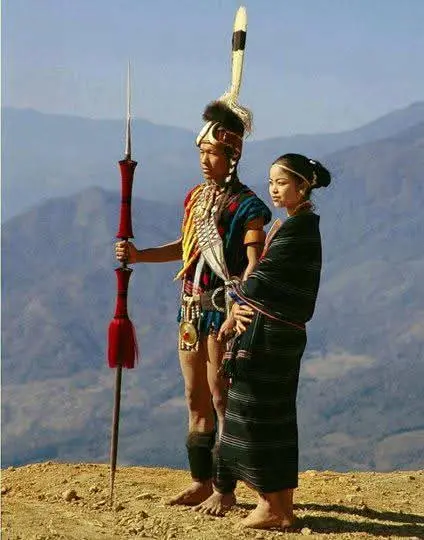
SHANGKEY (SHECHU) Migrations history
Our grandfather told us the story of our beginnings. Long ago, we came from LAYÜ LAYAM PUM, the first Mountain. From that sacred place, only three brothers came down, it was from their journey that our people began.
This is the history of three brothers. The first brother's name is SANWANG, and his wife's name is HOMNYAM. The second brother's name is SANKHONG, and his wife's name is GANSAN. The third brother's name is SANYU, and his wife's name is SANMI. These are the name of the three brothers.
This history is about the migration of the SHANGKEY (SHECHU) from the eastern region of present day Mongolia hills. Through this account, we will trace where the SHANGKEY (SHECHU) lived, where they settled and how they later divided into smaller groups and tribes. It also tell us which tribes came from where.
This history has been passed down orally from grandfathers to fathers, from fathers to sons, and from sons to grandsons. This is our traditional education system, the SHANGKEY (SHECHU) do not have a writing script; instead we share our history and life experience through spoken word. It is a lifelong practice. I must also share with my children the experience and way of life that I have learned, just as my elders shared with me.
Within SHANGKEY (SHECHU) sub-tribe five clans are recognized:
-
Shewi Shewa is clan of Chaushe familes:
a. Wanpi, Lawe, Nangkong, Khakhong, Chouraq and Aloh.
-
Yongwi Yongwa is clans of Nyaihu Tiyong familes:
b. Dzaupha and Chintaak.
-
Thugwi Thungwa is clans of Chungtuk familes:
c. Taura, Kekaup, Kongrang, Tibo, Lanraum.
-
Longwi Longwa is clans of Shongre family:
d. Shongre.
5. Chuthung is clans of Chashow family:
e. Chashow
today, the Shangkey Community lives on both sides of the India and Myanmar border. before India's independence, there was no international boundary separating our people. Even after India gained independence in 1947, our people continued to move freely in their traditional homeland, however following the India-Myanmar boundary agreement, which came into effect on 10 March 1967, our community became divided by the international border. At present, the Shangkey people mainly reside in Changlang District, while many families also live in Myanmar, some families have migrated and settled indifferent places.
The Shangkey Community celebrates two important traditional festivals:
MEY Festival, celebrated during the last week of May.
KUK Festival, celebrated during the last month of January.
these festivals reflect our cultural identity strengthen community bonds, and preserve the customs and traditions passed down by our ancestors.
Names of Month
January - Yirüm
February - Yingi
March - Rvwut
April - Wvri
May - Yishi
June - Yinam
July - Yijvm
August - Yishoi
September - Yishe
October - Wutwü
November - Yidan
December - Yidi
Names of week
Monday - Lvpan Ranai shi
Tuesday - Lvpan Ranai nai
Wednesday - Lvpan Ranai dzvm
Thursday - Lvpan Rabvlai
Friday - Lvpan Rabvngi
Saturday - Lvpan Ratvrok
Sunday - Lvpan
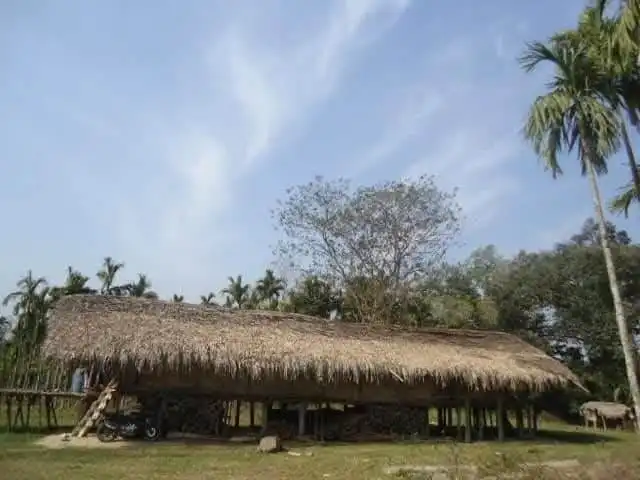
This is a traditional SHANGKEY (SHECHU) House from our forefathers time. in those days, after marriage, each son would be given one room in the same house. All the brothers and their families lived together 20 or 25 members under the one roof.
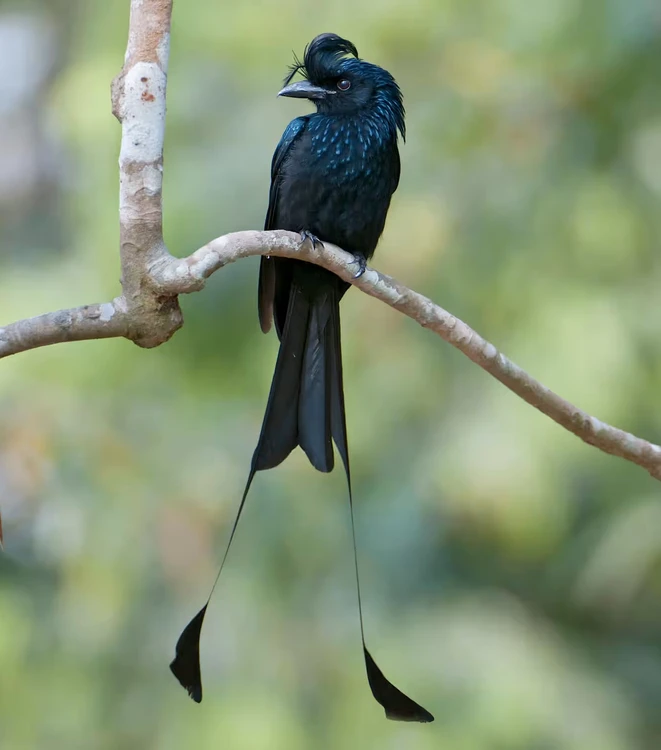
The black dragon bird represents our leaders and elders. It leads the smaller birds, and our elders tell us that we too are meant to be leaders and good example for others. We are called "SHECHU," where "SHE" means will animals and "CHU," means wild bee nest. in the time of our forefathers, they chased away wild animals and wild bee nests without fear. This is the meaning of SHECHU.
